

 Nov 19, 2026
 3 min read
Ask ten casino players what RTP means and you will get ten different answers. Most will say something like "it's the percentage you win back," which is tec
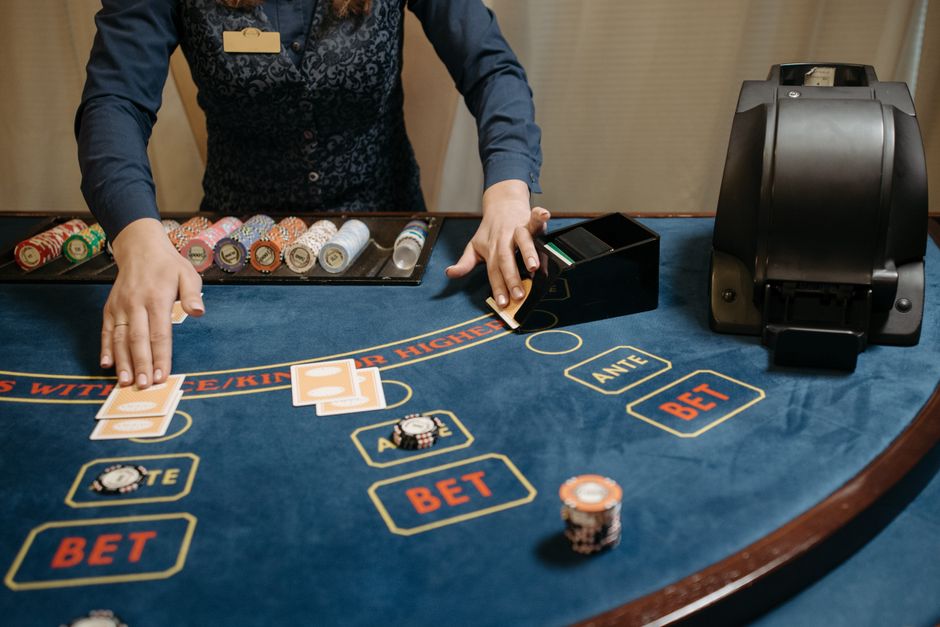
Ask ten casino players what RTP means and you will get ten different answers. Most will say something like "it's the percentage you win back," which is technically correct and practically useless. The gap between knowing a number and understanding what it does to your bankroll is where most players lose money — not to the house, but to their own expectations. Let's fix that.
A slot with 96% RTP does not mean you get 96 cents back for every dollar you insert. It means that across millions of spins — often tens of millions — the machine returns 96% of all money wagered and keeps 4% as the house edge. That 4% is baked into the math, not applied to your session.
Here is the uncomfortable part: variance masks RTP almost completely in short sessions. You can play a 96% RTP slot for two hours and walk away up 300%. You can also play the same slot and lose your entire bankroll in twenty minutes. Both outcomes are entirely consistent with 96% RTP. The number only reveals itself over sample sizes no individual player will ever reach.
This is why chasing "high RTP" slots as a strategy is mostly theater. Yes, a 97% RTP slot is mathematically better than a 94% one, and over 100,000 spins that difference is enormous. Over 500 spins, it is noise. Pick games you actually enjoy, because the entertainment value is the only reliable return in a single session.
Slots are simple: the house edge is fixed and you cannot change it. Table games are different. Blackjack, for instance, has a base house edge of roughly 0.5% with basic strategy — but that number swings wildly based on rules and your decisions.
Roulette is the classic trap. European single-zero roulette carries a 2.7% house edge. American double-zero roulette carries 5.26%. Same game, nearly double the edge, purely because of one extra pocket. If both tables are open, the choice is not close.
Craps is the rare game where the smart money is loud and clear: pass line and come bets with full odds, or don't pass with odds. The odds bets themselves carry zero house edge — the casino only profits on the flat portion. Placing full odds is the single best move in the entire casino, and most players ignore it because the payout feels less exciting than a hard eight.
Here is a fact that reframes everything: casinos do not really care whether you win or lose in a given session. They care how long you play. House edge works per hour, not per visit.
Consider a player betting $10 a hand at blackjack, 60 hands per hour. That is $600 in action per hour. At a 0.5% edge, expected loss is $3 per hour. Feels trivial. Now consider a slots player betting $2 per spin, 500 spins per hour. That is $1,000 in action per hour, and at a 4% edge, expected loss is $40 per hour. Same time investment, wildly different cost. Those comparing choices often turn to สล็อตเว็บตรง.
This is why the smartest players in the room treat their bankroll like a budget for entertainment, not an investment. They set a loss limit, they set a time limit, and they leave when either is hit. The math does not reward discipline with guaranteed wins, but it absolutely punishes the absence of it.
Poker is different because you are not playing against the house — you are playing against other people, and the house takes a rake. That single structural difference means a skilled player can have a genuine positive expectation.
But "skilled" is doing a lot of work in that sentence. The modern poker ecosystem, especially online, is brutally tough. Ten years ago a solid understanding of pot odds and position was enough to crush low-stakes games. Today, solvers have pushed optimal play deep into the micros, and recreational players are vastly better than they used to be.
If you want to actually win at poker, the checklist looks like this:
Every design decision in a casino — the sounds, the lights, the free drinks, the lack of clocks and windows — exists to keep you playing past the point of rational decision-making. Near-miss animations on slots trigger the same dopamine response as actual wins. Losses disguised as wins (you bet $5, get back $3, and the machine celebrates) are not accidents.
Understanding this does not make you immune, but it makes you harder to manipulate. The players who consistently leave with money in their pocket are not lucky. They are boring. They set limits, they stop, and they never chase. That is the whole secret, and it has nothing to do with hot streaks or machine cycles.
Casinos are entertainment businesses with a built-in mathematical edge, and that is fine as long as you see them clearly. Know the RTP of what you play. Pick games with lower house edges when you have the choice. Treat poker as the only game worth studying seriously, and then study it hard. Set limits before you sit down, and when the limit hits, actually leave. The math will never be on your side in the long run for slots or house-banked table games — but your decisions about how much time and money to feed it absolutely are.
Provide clear contact information, including phone number, email, and address.

This post covers tips on color schemes, fonts, and visuals to keep your profile visually appealing and cohesive.
 Sep 23, 2026

Gen Z is reshaping digital interaction. Learn what matters to this generation and how to create authentic, meaningful content.
Sep 18, 2026

Gen Z is reshaping digital interaction. Learn what matters to this generation and how to create authentic, meaningful content.
Sep 13, 2026
Unlock the tools and insights you need to thrive on social media with Broom Dale. Join our community for expert tips, trending strategies, and resources that empower you to stand out and succeed.

Broom Dale is your hub for the latest in digital innovation, technology trends, creative insights. Our mission is to empower creators, businesses, valuable resource.
© 2026 Broomdale. All rights reserved.


Tags
Matthew Kuhnemann
8/2/2024
“I love how this breaks down the importance of consistency and authenticity. It's easy to get caught up in trends, but staying true to yourself really is key. Great read!"